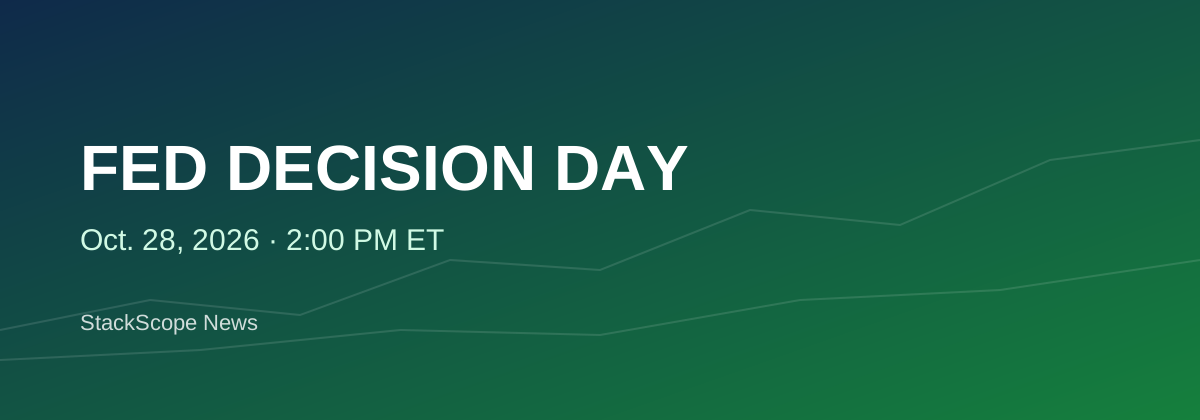
Fed Decision Day (Oct. 28, 2026): What a Hold — and a Likely December Hike — Mean for Small Business Software Budgets
Markets expect the Fed to hold rates today, but inflation is running hot and a December hike looks likely. Here's how to prepare your software spend before borrowing gets more expensive.
Key takeaways
- The Fed announces its decision today at 2:00 PM ET; markets put the odds of a hold at roughly 90%.
- The current target range is 3.75%–4.00%, after September's 25-point hike — the first increase in three years.
- September inflation came in at 3.7% year over year, and futures markets now see about a 73% chance of a hike on December 9.
- Before rates move again: lock annual pricing on tools you'll keep, check contracts for price escalators, and pay down card balances that fund subscriptions.
The Federal Reserve wraps up its two-day policy meeting today, October 28, 2026, and will publish its rate decision at 2:00 PM Eastern Time, followed by Chair Kevin Warsh's press conference at 2:30 PM. For most small businesses, the decision itself will not change anything overnight. What matters is the direction of travel — and right now, that direction points toward higher borrowing costs.
What to expect today
Markets are almost unanimous: futures tracked by CME FedWatch put the probability of no change at around 90%. That would leave the federal funds target range at 3.75% to 4.00%, where it has sat since the Fed raised rates by a quarter point in September — its first increase in three years.
Because policymakers do not publish new economic projections at the October meeting, the most useful signals will come from the wording of the statement and from Chair Warsh's answers in the press conference. Pay attention to how he describes inflation and whether he keeps the door open to another increase.
Why a hike is back on the table
Inflation has been above the Fed's 2% target for years, and the latest data moved the wrong way. The September consumer price index, released October 14, rose 0.6% in a single month and 3.7% from a year earlier, up from 3.4% in August. Gasoline alone jumped 9.1% in the month, driven by energy supply disruptions in the Middle East. Core inflation, which strips out food and energy, rose to 2.6% year over year.
That is why traders now see roughly a 73% chance of a rate hike at the December 8–9 meeting, up from about 42% a month earlier. Some bond-market pricing even points to further increases in early 2027. None of this is guaranteed — one or two softer inflation reports could change the picture quickly — but planning for slightly higher rates is the prudent default.
Why it matters for software spend
Interest rates reach a small business software budget through a few quiet channels:
- Credit cards and lines of credit. Many teams pay subscriptions on a business card or draw on a variable-rate line. When the Fed raises rates, those APRs usually follow within one or two billing cycles.
- Vendor price increases. SaaS companies facing higher costs of capital and wages tend to raise list prices or shrink discounts at renewal. Contracts with automatic "uplift" clauses pass this on without asking.
- Financing and buy-now-pay-later for hardware. Laptops, point-of-sale terminals and phones bought on installment plans get more expensive to finance.
- Cash-flow pressure on customers. If your own customers pay more slowly, the cash cushion that covers annual prepayments gets thinner.
Five moves before December
- Lock annual pricing on the tools you are sure to keep. If a core tool (accounting, CRM, email) offers a 15–20% discount for annual billing and you have the cash, prepaying now protects you from both list-price increases and higher card interest. Keep monthly billing for anything experimental.
- Read your renewal terms for escalators. Search contracts for phrases like "price adjustment," "CPI increase" or "uplift." Our guide to SaaS contract red flags shows what to push back on.
- Run a quick seat audit. Unused licenses are the easiest money to recover. The 30-minute routine in SaaS Budgeting 101 works well before year-end.
- Move subscriptions off high-interest balances. If you carry a card balance, every subscription on that card is effectively growing in price. Paying it down, or switching autopay to a debit or ACH account, is a guaranteed return.
- Tighten invoicing so cash arrives sooner. Automatic reminders, online card and bank payments, and deposits on larger jobs all shorten the time you wait to get paid. See our comparison of invoicing and payment tools.
What to watch next
After today's announcement, the next key dates are the October consumer price index in mid-November and the Fed's final meeting of the year on December 8–9, when officials will also release updated economic projections. If inflation cools, the December hike could be delayed; if it stays near 3.7%, expect borrowing costs to keep rising into 2027.
The official statement will be posted on the Federal Reserve's website at 2:00 PM ET. We will keep covering what rate moves mean for small business technology budgets in our News section.
This article is general information, not financial advice. Figures are based on market data and reports available on the morning of October 28, 2026.